
San Diego Homes With Solar, Tile Roofs, and Hard-to-Reach Areas: When Does a Drone Inspection Help? (2026)
Not every roof needs a drone. A single-story home with a 4/12 pitch and composition shingles? The inspector walks it, checks it, and documents it. No drone required. Done in 20 minutes.
But San Diego's housing stock isn't all single-story walkable shingle. It's tile. A lot of tile. It's steep pitches on hillside homes. It's multi-level rooflines with valleys and transitions at three different heights. It's solar panel arrays covering half the roof surface. And it's properties where some combination of these factors makes walking the roof either impossible, inadvisable, or likely to cause more damage than it prevents.
This guide covers the specific San Diego situations where drone inspection adds real value, how it handles the challenges of solar, tile, and complex rooflines, and when it's worth the cost versus when it isn't.
Tile Roofs: The San Diego Standard That Can't Be Walked
Clay and concrete tile are the dominant roofing materials in San Diego's suburban developments from the 1990s onward. Rancho Bernardo, Scripps Ranch, Carmel Valley, 4S Ranch, Poway, San Marcos, Oceanside, Carlsbad. Drive through any of these neighborhoods and tile is everywhere.
Tile roofs last 40 to 50 years or more when maintained. The tiles themselves are durable. But they're also brittle under point loads, which means foot traffic cracks them. An inspector walking a tile roof to check for damage can create damage in the process. A cracked tile is a leak point, and an inspection that creates new leak points defeats the purpose.
This is where drone evaluation is the clear right call. The drone captures the tile condition (cracked, displaced, chipped tiles), flashing at every penetration, valley condition, ridge tile condition, and gutter condition without touching the surface. The inspector gets the information. The roof stays intact.
What drones catch on tile roofs that matters: Cracked or displaced tiles that aren't visible from the ground. Tiles that shifted during a wind event or from thermal cycling. Failed mortar at ridge tiles. Deteriorated flashing at chimneys, skylights, and plumbing vents. And evidence that someone previously walked the roof and left cracked tiles behind (a finding that shows up more often than you'd expect).
For more on how tile roof condition affects San Diego homes over time (especially the underlayment beneath the tiles, which has a shorter lifespan than the tiles themselves), our aging roof inspection guide covers the details.
Solar Panels: What's Under Them and Around Them
Solar panels create two inspection challenges. First, they cover a significant portion of the roof surface, hiding whatever condition exists beneath them. Second, the mounting system creates dozens of penetration points that are difficult to evaluate from the ground.
A drone can't see through solar panels. Nobody can without removing them. But it provides critical information about the visible components of the installation and the roof around it.
What drones capture on solar roofs: The condition of the panels themselves (cracking, discoloration, debris accumulation, bird nesting under the panels). The racking hardware (corrosion, loose connections, missing components). The visible flashing at mounting points around the panel perimeter. The roof surface on every section not covered by panels. And the conduit runs between the array and the inverter for routing condition and support.
For homes where the roof was already aging when the panels were installed (and the panels have been up for another 8 to 10 years), the drone imagery of the surrounding roof condition becomes especially important. If the uncovered portions show significant wear, the covered portions are likely in similar or worse condition because debris and heat accumulate under the panels.
For the full scope of what inspectors evaluate on solar homes (beyond just the roof), our solar panel home inspection guide covers ownership structures, electrical components, inverter condition, and warranty considerations.
Multi-Level Rooflines: San Diego's Complex Architecture
San Diego homes, especially those on hillside lots or in custom neighborhoods, frequently have complex rooflines with multiple levels, multiple pitches, and transitions that create inspection access challenges.
A two-story home with a front-facing gable, a side hip, and a flat section over the garage has at least four distinct roof planes, multiple valleys, and transitions at different heights. From the ground, the inspector can see parts of each. From the air, the drone captures every surface and every transition in a systematic flyover.
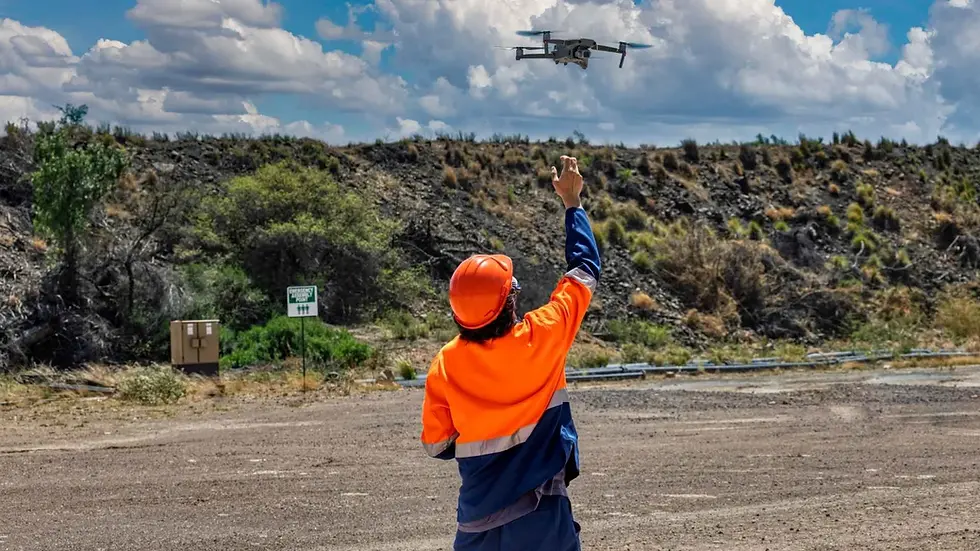
Where multi-level rooflines hide problems: At the transitions between different pitches (where step flashing and kickout diverters are critical and frequently missing or deteriorated). In the valleys between intersecting planes (where debris accumulates and moisture concentrates). On upper sections that no ladder can reach from the ground. And at the junction where a lower roof meets a taller wall (one of the most common leak sources in multi-level construction).
When a Drone Inspection Adds Value vs. When It Doesn't
The drone isn't always the right tool. Here's when it adds clear value and when you can skip it.
Situation | Drone Adds Value? | Why |
Tile roof (any pitch) | Yes | Walking cracks tiles; drone evaluates without contact |
Steep pitch (above 6/12) | Yes | Unsafe to walk; drone accesses every surface |
Multi-story with complex roofline | Yes | Upper sections and back slopes inaccessible from ground |
Solar panels covering the roof | Yes | Documents panel condition and visible mounting/flashing |
Single-story, walkable shingle, no solar | No | Inspector walks and evaluates directly |
Flat roof with safe access | Supplemental | Walking provides physical evaluation; drone adds overhead view |
Home near airport or military base | Maybe | FAA airspace restrictions may limit or prevent drone operations |
Santa Ana wind event day | No | Unsafe to fly; reschedule drone portion |
San Diego Airspace Considerations
San Diego has more controlled airspace than most cities because of its military and civilian aviation facilities. Drone operations near MCAS Miramar, San Diego International Airport (Lindbergh Field), Montgomery Field, Brown Field, and Gillespie Field require LAANC authorization from the FAA.
A Part 107 certified pilot manages this authorization through the FAA's LAANC system, which provides near-real-time approval for drone operations in most controlled airspace zones. However, some areas (directly adjacent to active runways, for example) may have zero-altitude ceilings that effectively prevent drone use.
For most residential neighborhoods in San Diego County, drone operations are permitted either outright (in uncontrolled airspace) or with LAANC authorization. The inspector confirms authorization before the inspection and adjusts the approach if restrictions prevent drone deployment at a specific location.
How 360 Determines When to Deploy the Drone
We don't add drone services to every inspection as a standard upsell. We deploy the drone when the roof condition requires it: tile that can't be walked, pitches above 6/12, multi-story sections that can't be reached by ladder, and homes with solar installations where the roof needs aerial evaluation.
Our inspector is FAA Part 107 certified and carries the drone as standard equipment. When conditions call for it, the drone goes up. When the roof is walkable and accessible, we walk it. The decision is based on what gives the buyer the most complete evaluation, not on what generates the highest invoice.
The drone imagery integrates into the same inspection report as every other finding. One report. Full coverage. No separate documents or separate fees for the aerial component.
For everything our inspections cover, see our home inspection buyer's guide.
Schedule online or call (858) 707-7066.
Frequently Asked Questions
Q: When does a drone inspection help in San Diego specifically?
Tile roofs (widespread across San Diego's suburban developments), steep-pitched homes on hillside lots, multi-story homes with complex rooflines, and properties with solar panel installations are the primary situations where drone evaluation adds clear value in the San Diego market.
Q: Can a drone inspect the roof under solar panels?
No. The drone can't see through panels. It documents the visible roof surface around the panels, the panel condition from above, the racking hardware, and the flashing at accessible mounting points. Seeing the actual roof surface beneath the panels requires panel removal, which is a separate scope.
Q: Does the drone inspector need FAA authorization for San Diego?
The inspector must hold an FAA Part 107 Remote Pilot Certificate. In controlled airspace (near airports, military installations), additional LAANC authorization is required. Most San Diego residential areas are accessible with either no restriction or standard LAANC approval.
Q: Is drone inspection more expensive in San Diego?
Drone Launch Academy's 2026 industry data puts pricing consistent with national ranges: $75 to $200 as part of a home inspection, $150 to $400 as a standalone service. San Diego-specific factors (controlled airspace complexity, prevalence of tile roofs requiring drone evaluation) don't significantly affect the base price.
Q: Can Santa Ana winds prevent a drone inspection?
Yes. Sustained winds above approximately 25 mph make drone operations unsafe. During Santa Ana events (which can push gusts over 60 mph in canyon and hillside areas), the drone portion is rescheduled. The rest of the inspection can typically proceed as planned.
Q: Should I get a drone inspection for a condo?
If you're buying a condo unit, the roof belongs to the HOA and isn't part of your unit inspection. Drone evaluation of a condo building's roof would be arranged by the HOA, not the individual buyer. For townhomes where you own the roof, drone evaluation applies the same way as a single-family home.
Q: How do I know if my inspector uses drones?
Ask when scheduling. Confirm Part 107 certification. Not all inspectors carry drone equipment, and not all drone operators are certified for commercial use. An inspector who offers drone services as needed (rather than as an upsell on every inspection) is typically making the deployment decision based on the property, not the invoice.
Q: Can drone images be used for insurance claims?
Yes. Imagery captured by a Part 107 certified pilot provides documented evidence of roof condition that insurance companies recognize. The photos serve as pre-loss baseline documentation (if captured during a purchase inspection) or as damage documentation (if captured after a weather event).
Q: What's the best drone for home inspection in San Diego?
The DJI Mavic series (Air, Pro, or Enterprise models) is the most commonly used platform among home inspectors, offering high-resolution cameras, obstacle avoidance, and compliance with FAA Remote ID requirements. The specific model matters less than the pilot's skill and the camera quality.
Q: How long does the drone inspection take?
Flight time is 10 to 15 minutes for a standard residential property. Including setup, authorization check (if in controlled airspace), and landing, the drone adds about 20 to 30 minutes to the overall inspection time.
The Right Tool for the Right Roof
A drone isn't a gimmick. It's a practical solution to a real access problem that exists on a significant portion of San Diego's housing stock. Tile roofs, steep pitches, solar panels, and multi-level construction create situations where walking the roof isn't safe, isn't possible, or causes damage. The drone handles all of those.
The question isn't whether drone technology works. It does. The question is whether your inspector has it, knows when to deploy it, and holds the certification to use it legally. Ask before you book.
Cost estimates in this article reflect general ranges for the San Diego County market as of 2026. Prices vary by inspector and property complexity. Always confirm drone capability before scheduling.


Comments